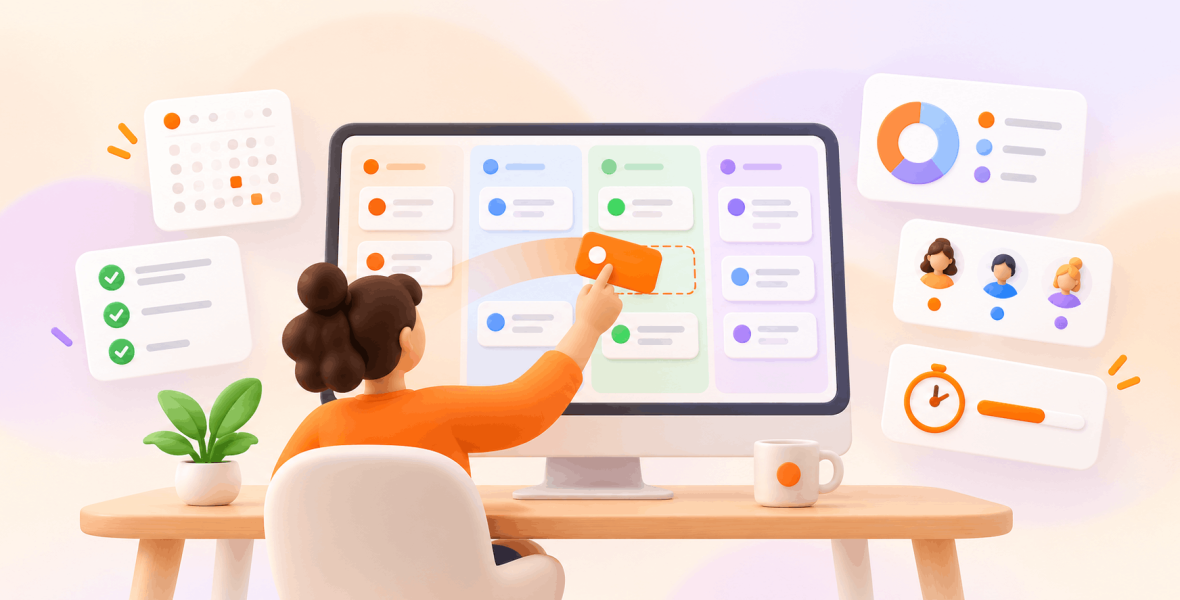
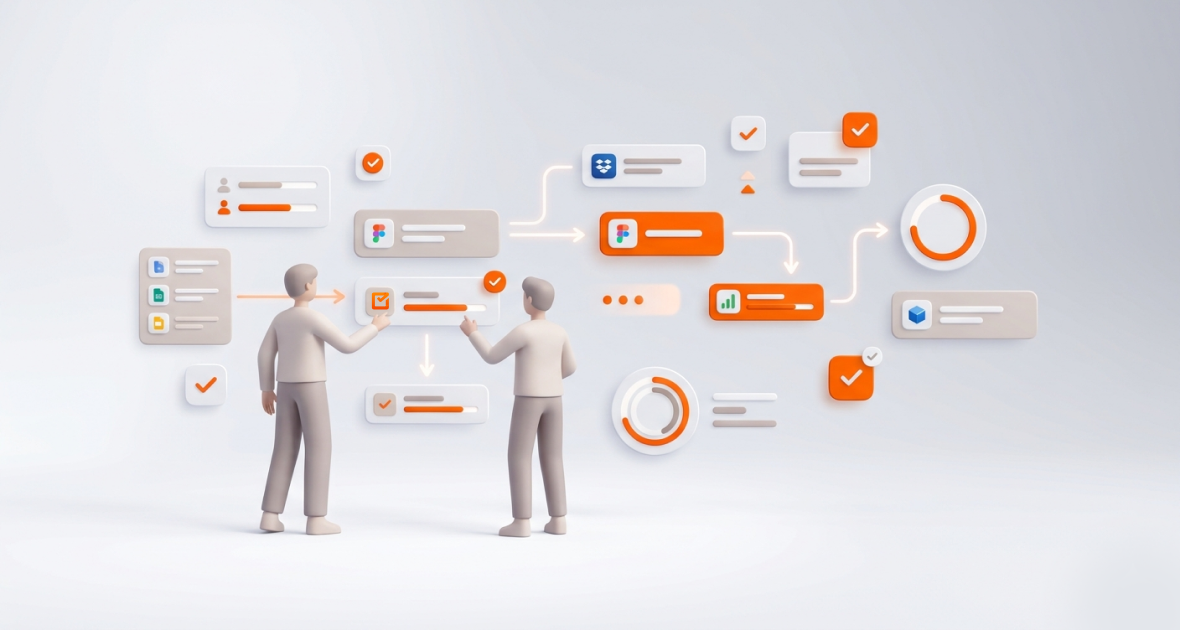
Tracking team app usage shows which apps and websites your team uses during work time and how long each one takes. With that data, managers can spot distractions, cut tool overload and coach people with facts instead of guesses. In TimoDesk, apps and websites are recorded only while a member’s timer runs, per member, project and task.
Teams rely on many apps to get work done, but not every app helps. People switch between tools all day, lose focus and drift to social media, video sites or news. These small breaks add up to missed deadlines and lower output.
For managers, the challenge is visibility. Without clear data on which apps are used during work, it is hard to see where time goes, especially in remote and hybrid teams.
TimoDesk app and website usage sits next to activity levels, tasks and work hours in one place. It costs $1 per user per month, with every feature on one plan.
Why does tracking team app usage matter?
App usage tracking is about clarity, not surveillance. Here is why teams use it:
- See work apps and non-work apps: Code editors, design tools and project tools create value. Social media and streaming sites drain focus. App usage data shows the split, and managers decide what counts as work for each role.
- Manage remote and hybrid teams: Teams across time zones lack office routines. App data shows work patterns without constant check-ins.
- Balance workload: When leaders see who spends long hours in core tools and who is stuck in email, they can rebalance work and prevent burnout.
- Cut wasted time: Tracking shows where time leaks, like too many chat notifications or open tabs. Teams can then change habits or tools.
- Coach with facts: Managers can have clear, fair talks: “You spent more time in design tools this week. Nice work. Email took longer than usual; let’s look at why.”
A lot of knowledge work is “work about work”: status updates, app switching and searching for information. App usage data makes these hidden costs visible.
What problems do teams face without app monitoring?
- Distraction: Social media and video sites break focus. Without data, the leaks stay hidden until output drops.
- No view of real work patterns: In remote teams, managers can’t tell if time goes to work tools or personal browsing. Assumptions replace facts.
- Overestimated hours: People often believe they focus longer than they do. Self-reports paint a rosier picture.
- Constant app switching: Every switch costs recovery time. Without data, teams underestimate this cost.
- Late projects: Time leaks into non-essential apps, and managers find the cause only after deadlines slip.
These problems lower output, raise burnout and hurt morale.
How does app usage tracking work?
App usage tracking software runs on work computers and records which applications are used and for how long. Tools differ in a few important ways:
| Question | What some tools do | What TimoDesk does |
|---|---|---|
| When does tracking start? | Some start on their own when an app is in focus | The member starts the timer on a task; apps are recorded only while it runs |
| What about idle time? | Varies by tool | Idle time is removed after a timeout you set from 3 to 60 minutes |
| Are apps labeled productive or not? | Some tools sort apps into productive and unproductive groups | No labels or scores; managers read the data and decide |
| Is it linked to work? | Varies by tool | Usage is shown per member, project and task |
| What about websites? | Varies by tool | Records the site, page address, page title and browser, never page content |
The real value comes from context. When app usage links to projects and tasks, you see not just what apps were used, but for which work.
Good tools are open. People should know what is tracked, tracking should cover only work time on work devices, and staff should be able to see their own data. In TimoDesk, staff see only their own data, and nothing is recorded when the timer is off.
How does TimoDesk help you track team app usage?
One dashboard
Managers see the team’s time, activity levels and top apps and websites. The dashboard also shows who is working now and flags low activity and long workdays.
App and website usage while the timer runs
Members start the timer on a task in the desktop app. While it runs, TimoDesk records the apps and websites they use and how long each was in use. The app keeps tracking offline and syncs later. Screenshots add more context.
Usage per project and task
App and website usage is shown per member, per project and per task. You can see which tools a design project or a software sprint really needed. This helps you judge software spending and spot training needs.
Reports
View usage for the whole organization or one member. The app usage report and the websites and URLs report download as PDF or CSV. Use them in leadership meetings or one-on-one coaching.
The desktop app is lightweight and runs on Windows, macOS and Linux. On Linux, website tracking needs the TimoDesk URL Tracker browser extension.
How do you set up app usage tracking in TimoDesk?
- Create your account: Start the 15-day free trial and invite your team by email.
- Agree on what counts as work: Decide with each team which apps and sites are core to their role. Write it down so reviews are fair.
- Install the app: Members install the desktop app on Windows, macOS or Linux. Explain what is tracked and why.
- Create projects and tasks: Members start the timer on a task, so app usage is linked to that work.
- Review reports: Check the dashboard daily and the app usage report weekly.
- Give feedback: Use the data for positive coaching focused on growth.
- Improve workflows: Drop tools nobody uses, simplify repetitive work and add training where needed.
What are the best practices for app usage tracking?
- Tell people about tracking from day one, and explain the reasons.
- Focus on better work, not micromanagement.
- Review app usage reports often to spot trends early.
- Use data to coach, not punish.
- Combine app data with time tracking and tasks for full context.
How do different teams use app usage tracking?
- Remote teams: Marketing teams see how much time goes to work tools and how much to social media, and win back focus time.
- Agencies: Design and development agencies see time in Figma, Photoshop or VS Code per client project. This supports billing and shows unused tools. See TimoDesk for agencies.
- Support teams: Leaders see time in the CRM, chat tools and the browser, and use it to improve response times.
- IT teams: Developers see time in the IDE, documentation and meeting tools, and cut context switching.
What are the benefits of tracking team app usage?
App usage tracking shows how people spend their digital work time. It raises accountability and helps people stay on high-priority tasks. Teams can find and win back time lost to non-work apps. It also shows if time spent matches project goals.
Managers get facts for coaching and training. Teams get simpler workflows and fewer distractions.
What mistakes should you avoid?
- Tracking without telling people: It breaks trust fast.
- Ignoring context: A “non-work” site may be research. A short break is normal.
- Over-monitoring: It hurts morale and engagement.
- Never reviewing reports: Data you don’t read is useless.
- Looking at apps alone: Without time and task data, you get an incomplete view.
How can you get the best results?
Agree on which apps are core for each role and review that list from time to time. Set realistic goals per role. Check insights often and adjust workflows. Recognize focused work in public to lift morale.
Use app usage data to improve training and internal processes. Turn patterns you see into team best practices.
Conclusion
Distractions are everywhere, but good teams don’t leave productivity to chance. Tracking team app usage shows hidden time leaks, links effort to results and builds a culture of focus. TimoDesk records app and website usage while the timer runs, per member, project and task, for $1 per user per month.
Start your 15-day free trial and see where your team’s work time goes.
Frequently asked questions
Is app usage monitoring ethical and legal?
Usually yes, when people are told, it covers only work time on work devices, and it focuses on work. Rules differ by country, so check local law. TimoDesk records nothing when the timer is off.
Does TimoDesk label apps as productive or unproductive?
No. TimoDesk shows which apps and websites were used and for how long. Managers decide what counts as work for each role.
Does tracking start on its own?
No. Members start the timer on a task in the desktop app. App and website usage is recorded only while it runs, and idle time is removed.
Does app usage tracking hurt team morale?
Not when it is open and used for growth. Clear data can make reviews fairer and show where workloads are uneven.
Was this helpful?
Share it with someone who still adds up hours by hand.